
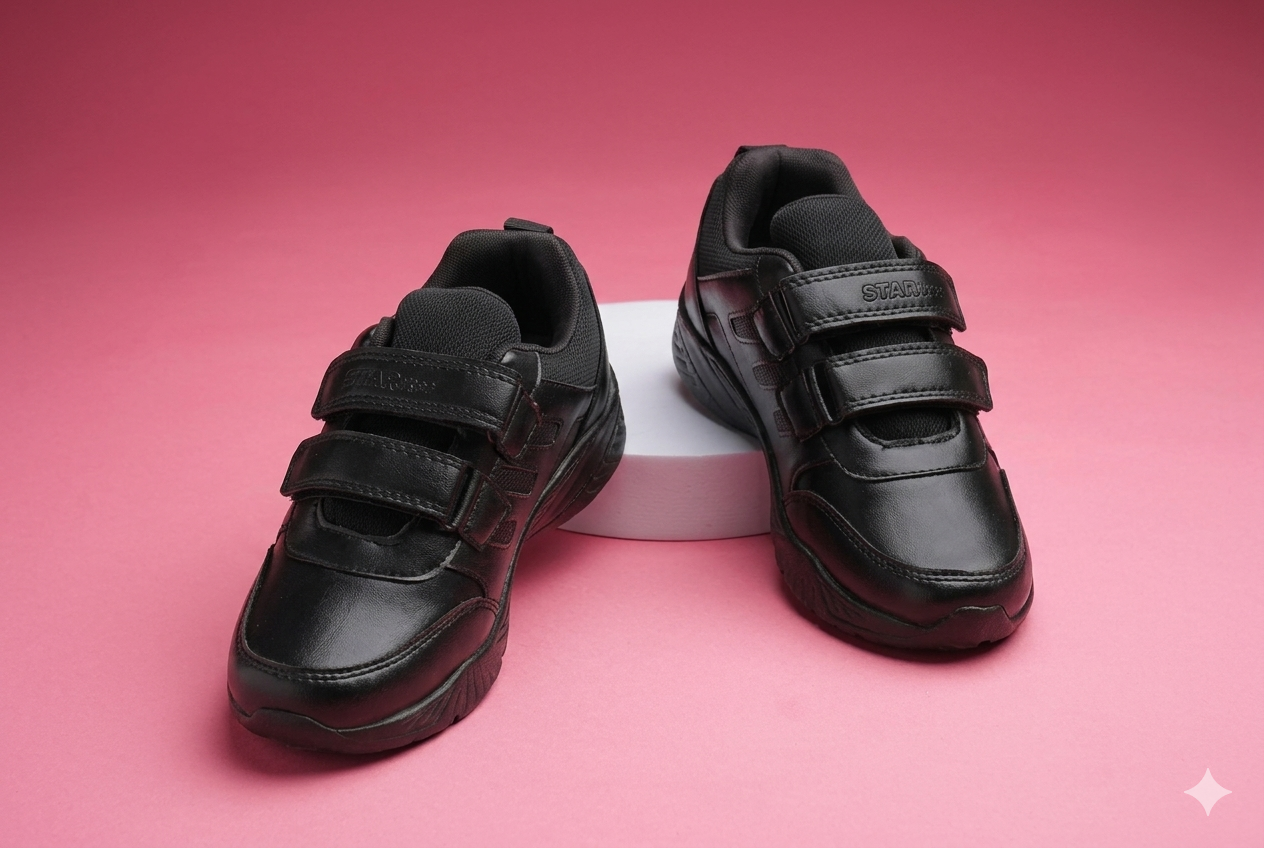
As a footwear industry expert in children’s footwear design, pediatric foot development research, and retail consulting, I can confidently say one thing:
School shoes are not just part of a uniform; they are a critical part of a child’s daily health, movement, and long-term foot development.
Children spend 6 to 10 hours every day in school shoes. During this time, their feet are constantly moving — running, climbing stairs, standing in assembly, and playing in the ground. Yet most parents spend more time choosing a school bag than a school shoe.
That needs to change. Because the wrong shoe at the wrong age can affect not just comfort, but posture, walking pattern, and long-term foot development.
Why School Shoes Are More Important Than Parents Realize
When parents shop for school shoes, the decision is often influenced by three factors:
- School uniform rules
- Price
- Appearance
But in reality, none of these should come before comfort and foot health.
A child spends 6 to 10 hours every day in school footwear. During this time, their feet are not resting — they are constantly moving, bending, running, standing, climbing stairs, and participating in physical activities.
This makes school shoes one of the most used and most important products in a child's daily life.
Children’s feet are also different from adults':
- Bones are still forming
- Arches are developing
- Muscles are soft and flexible
- Growth is rapid and continuous
Children's feet are also different from adults':
- Bones are still forming
- Arches are developing
- Muscles are soft and flexible
- Growth is rapid and continuous
If footwear is not properly designed, it can lead to:
- Discomfort and fatigue
- Improper walking posture
- Heel pain or arch strain
- Reduced focus in class
- Long-term foot development issues
That is why selecting comfortable school shoes for kids is not optional — it is essential.

The Role of School Shoes in Child Development
Many parents are surprised to learn that footwear plays a direct role in a child's development.
- Impact on Walking Pattern: Children learn how to walk, run, and balance through repeated movement. If shoes are too stiff or too loose, they can alter natural walking patterns.
- Posture Alignment: Poor footwear can affect how weight is distributed across the feet, which can indirectly impact knees, hips, and spinal posture.
- Physical Activity Performance: Children are naturally active. Good shoes improve speed, balance, and confidence during playtime and sports activities.
- Long-Term Comfort Habits: The right footwear teaches children how comfort feels, helping them avoid future foot-related issues in adulthood.
Research in pediatric podiatry consistently shows that children in well-fitted, supportive footwear demonstrate better balance, improved physical activity levels, and fewer complaints of foot fatigue during school hours.
Key Features of the Best School Shoes for Kids
Choosing the right school shoes requires understanding what actually matters in daily usage. Let's break down the most important features every parent should look for.
1. All-Day Comfort and Cushioning
Comfort is the foundation of every good school shoe. A child should not feel like they are "wearing shoes." Instead, shoes should feel like a natural extension of their feet.
High-quality cushioning helps:
- Reduce pressure on heels
- Absorb shock during running and jumping
- Prevent foot fatigue during long school hours
- Improve overall walking comfort
Soft insoles and padded interiors ensure children stay comfortable from morning assembly to the final school bell.
2. Breathability for Healthy and Fresh Feet
Children's feet sweat more than adults' due to higher activity levels. Without proper ventilation, shoes can become moist, uncomfortable, and odor-prone.
Good school shoes should include:
- Airflow mesh panels
- Moisture-absorbing lining
- Ventilation-friendly structure
Breathable shoes ensure feet remain dry, fresh, and irritation-free throughout the day.
3. Durability That Can Handle Daily Rough Use
School shoes go through extreme daily conditions — running on rough playgrounds, dust and dirt exposure, frequent bending, and long hours of continuous use.
Durability depends on:
- Strong stitching quality
- High-grade synthetic or leather upper
- Reinforced toe protection
- Long-lasting outsole grip material
A durable shoe is not just long-lasting — it is cost-effective in the long run.
4. Lightweight Design for Easy Movement
Heavy shoes slow children down and increase fatigue. Lightweight shoes help children move faster, feel less tired, and stay active throughout the day.

5. Proper Fit and Natural Arch Support
One of the biggest mistakes parents make is buying oversized shoes thinking children will "grow into them." Improper fit causes slipping, blisters, incorrect walking posture, and reduced balance.
A perfect school shoe should:
- Fit snugly without tightness
- Allow toe movement
- Support natural arch development
- Hold the heel firmly in place
Good arch support is especially important during growth years (ages 6–14).
6. Slip Resistance for Safety
School environments are full of movement:
- Wet floors during cleaning
- Smooth corridors
- Playground surfaces
- Staircases
Slip-resistant soles are essential for preventing accidents.
A good sole should:
- Provide a strong grip
- Offer stability during running
- Prevent sudden slipping
- Support quick direction changes
Slip-resistant soles are essential for preventing accidents on wet floors, smooth corridors, and playground surfaces.
7. Easy Wearing and Child-Friendly Design
Younger children especially benefit from:
- Velcro straps
- Easy closures
- Simple slip-on designs
Younger children especially benefit from velcro straps, easy closures, and simple slip-on designs. This builds independence and confidence in daily routines.
Common Mistakes Parents Make While Buying School Shoes
Even the most caring parents unknowingly make mistakes.
- Buying Bigger Sizes for Future Growth — Oversized shoes reduce balance and increase the risk of injury.
- Choosing Style Over Function — Fancy designs often ignore comfort and structural support.
- Ignoring Material Quality — Cheap materials break down quickly under daily use.
- Not Checking Flexibility — Shoes that are too rigid restrict natural foot movement.
- Delaying Replacement — Children's feet grow quickly, and old shoes can become tight without parents noticing.
Choosing Shoes Based on Age Groups
Preschool (3–6 Years) — Safety + Softness First
At this age, children are still developing their sense of balance. Their bones are soft and arches are just beginning to form. Shoes at this stage should have ultra-soft, flexible soles that allow natural foot movement. Velcro straps work best because they help children develop independence while ensuring a secure fit. Heavy or rigid shoes at this age can interfere with natural gait development.
Primary School (6–10 Years) — Durability + Daily Comfort
This is the most active phase of school life. Children are running on playgrounds, climbing, and sitting for long hours. Shoes need strong grip soles to prevent slipping, breathable material to keep feet fresh, and enough cushioning to handle hours of continuous use. A secure fit around the heel is especially important at this age to prevent blisters.
Upper Primary / Middle School (10–14 Years) — Structure + Performance
As children grow older, their physical activity becomes more intense. Arch support becomes critical during these years because the foot's natural arch is still developing and can be affected by poor footwear. Shoes should offer shock absorption, a firm outer build, and enhanced durability to handle both classroom hours and sports activities.

Why Starkidz School Shoes Are a Trusted Choice
At Starkidz, we don’t just manufacture shoes — we design growth-friendly footwear systems for children.
Our philosophy is built on three pillars:
- Child-Centric Design: Every shoe is designed based on real child movement patterns, not adult assumptions.
- Comfort-First Engineering: We prioritize cushioning, flexibility, and breathability over unnecessary design complexity.
- Durability with Purpose: We ensure shoes last through the toughest school routines without compromising comfort.
Parents trust Starkidz because we understand child foot development, focus on long-term comfort, balance quality with affordability, and design for real school-life conditions.
Expert Maintenance Tips for Longer Shoe Life
- Clean After Every Use: Use a soft dry cloth to remove dust and dirt from the upper material. For tougher stains, a damp cloth works well — avoid soaking the shoe as it weakens the sole bonding.
- Always Air Dry: After a long school day, let shoes breathe in open air. Never dry near direct heat or sunlight as it causes the material to crack and the sole to separate faster.
- Check the Fit Every 3 Months: Children's feet grow quickly — sometimes half a size in just a few months. A shoe that fits perfectly in June may be too tight by October. Regular fit checks prevent discomfort and posture issues.
- Use Cotton Socks: Good socks work with good shoes. Cotton socks absorb sweat, reduce odor, and prevent friction that causes blisters.
Frequently Asked Questions
1. Which shoes are best for school-going children?
The best shoes for school-going children should have proper cushioning, arch support, breathable material, and a slip-resistant sole. Lightweight and well-fitted shoes that support natural foot development are ideal for daily school use.
2. What type of shoes should kids wear to school?
Kids should wear closed-toe shoes with flexible soles, good grip, and comfortable fit. Shoes with velcro straps work well for younger children, while older kids can use lace-up styles for a more secure fit.
3. How do I choose the right school shoes for my child?
Always check the fit first — there should be a thumb's width of space at the toe. Look for lightweight construction, breathable material, arch support, and slip-resistant soles. Avoid buying oversized shoes thinking your child will grow into them.
4. What size school shoes should I buy for my child?
Always measure your child's feet before buying. Shoe size should allow enough room to wiggle toes but should not be loose at the heel. Children's feet grow fast, so check the fit every 3 to 4 months.
5. Are canvas shoes good for school?
Canvas shoes can be comfortable for light use but may not provide enough arch support or durability for daily school activities. For full-day school wear, shoes with structured soles and proper cushioning are a better choice.
6. How long do school shoes last for kids?
Most school shoes last 6 to 12 months depending on the child's activity level and foot growth rate. Regular cleaning and proper storage can extend shoe life, but always replace when the fit becomes tight or the sole wears out.
7. Are velcro school shoes better than lace-ups for kids?
For children under 8 years, velcro shoes are better as they are easy to wear independently. For older children, lace-up shoes provide a more secure and adjustable fit suitable for active school days.
8. What is the best material for kids' school shoes?
Breathable mesh or high-quality synthetic material works best for school shoes. These materials keep feet dry, reduce odor, and handle daily wear and tear without becoming too heavy or stiff.
9. Should school shoes have arch support?
Yes, especially for children between 6 to 14 years. Arch support during these growing years helps maintain proper posture, prevents flat feet, and reduces heel and foot pain after long school hours.
10. How do I know when my child needs new school shoes?
Replace school shoes when your child complains of foot pain or discomfort, when the sole is visibly worn out, when the shoe feels tight or causes blisters, or when you notice more than 3 to 4 months have passed since the last size check.

Conclusion: The Right Shoes Build a Strong Foundation for Life
Choosing the best shoes for school-going children is not just about meeting school requirements — it is about ensuring your child’s comfort, confidence, and healthy development.
A well-designed school shoe supports:
- Healthy foot growth
- Proper posture
- Active lifestyle
- All-day comfort
- Injury prevention
As experts with decades of experience, our advice is simple:
Never compromise on comfort and fit for the sake of price or appearance.
At Starkidz, our mission is to ensure every child steps into school with comfort, confidence, and freedom — because every great journey begins with the right step.
View Also This Product

Share:
Which Shoes Are Best for Growing Kids | Starkidz
Best Sandals for Kids in Summer in India